
How Canadian County Warrants Appear in OSCN
The Oklahoma State Courts Network at oscn.net is the primary public tool for warrant-related research in Canadian County. OSCN does not publish a separate active-warrant list. Instead, warrant entries show up as docket events within a District Court case file. When a judge issues a warrant or when a defendant fails to appear, the Court Clerk records that event in the case docket. That entry is visible to anyone who pulls up the right case on OSCN.
Common warrant-related docket entries include warrant issued, bench warrant, failure to appear (sometimes abbreviated FTA), alias warrant, recall warrant, quash warrant, bond forfeiture, and cost warrant. Search-warrant cases carry their own case-type code: SW. Those entries look like any other docket line but mark a significant change in the case status. A bench warrant or failure-to-appear entry is often a sign that the defendant did not show up for a scheduled hearing, and the judge directed the court clerk to issue a warrant for that person's arrest.
Because warrant status can change quickly, pulling up a case on OSCN gives a snapshot, not a live guarantee. A warrant issued last week may have been recalled or quashed by the time you look. Always confirm the current status through the Court Clerk's office or an attorney before acting on what OSCN shows.
Note: OSCN's citation search field covers only District Court traffic citations and does not search municipal citations issued in El Reno or other cities in Canadian County.
OSCN Warrant-Related Search Fields for Canadian County
The OSCN docket search at oscn.net/dockets/Search.aspx lets you search by party name, case type, or case number. For warrant research, the most useful approach is a name search limited to Canadian County District Court, followed by a review of each case's docket for warrant entries. The fields below come directly from the OSCN search form as documented by the Canadian County Court Clerk.
| Field Label | Type | Required | Options / Format Notes |
|---|---|---|---|
| County or Court | Dropdown | For county search | Select Canadian County District Court or All Oklahoma Courts. |
| Last Name | Text | Optional | Party search; county says last and first name are enough. |
| First Name | Text | Optional | Party search; other fields not required for a basic search. |
| Case Number | Text | Optional | Use if known. Warrant cases may carry CF, CM, TR, or SW prefix. |
| Limit by Case Type | Dropdown | Optional | Criminal Felony, Criminal Misdemeanor, Traffic, Search Warrant, or Protective Order to narrow results. |
| Citation Number | Text | Optional | District Court traffic citations only; does not search municipal citations. |
| Cases Filed After / Before Date | Date | Optional | Narrows results by filing date range; format MM/DD/YYYY. |
After you run a search, click through each returned case to view the full docket. Look for event lines that say warrant issued, bench warrant, or failure to appear. Those lines confirm a warrant was created. Look further down the docket for a recall or quash entry, which would mean the warrant was canceled. If no recall appears, the warrant may still be active.
Types of Canadian County Warrants
Warrants come in several forms, and each type tells a different story about where a case stands. The Canadian County Court Clerk issues legal warrants as part of District Court proceedings. The types most often seen in Canadian County District Court cases are described below.
- Bench Warrant
- A judge issues a bench warrant when a defendant or party fails to appear at a required court date. The warrant authorizes law enforcement to take the person into custody and bring them before the court. It appears as a docket entry on OSCN and remains in the case record even if later recalled.
- Failure to Appear (FTA)
- A failure-to-appear entry records that the court found the person absent from a scheduled hearing. An FTA entry often triggers a bench warrant in the same case. Both entries may appear in the same case docket.
- Alias Warrant
- An alias warrant is issued when a prior warrant was not served and the person was not brought in. It refreshes the authority to arrest. Some older Canadian County cases show multiple alias warrant entries before final service or recall.
- Recall / Quash Warrant
- When a warrant is canceled, the docket records a recall or quash entry. This can happen if the defendant appears voluntarily, posts bond, or an attorney files a motion to recall. A recalled warrant is no longer active, but the entry stays in the case history.
- Search Warrant (SW)
- Search warrants are their own case type in the OSCN system, using the SW case-type code. They authorize law enforcement to search a location or property. Search warrant cases may have limited public details depending on the stage of the investigation.
- Bond Forfeiture
- If a defendant fails to appear after posting bond, the court may enter a bond forfeiture. This entry shows up in the financial section of the docket and may trigger additional warrant activity in the case.
- Cost Warrant
- A cost warrant issues when court-ordered fines, fees, or costs remain unpaid and the court authorizes collection action. These appear in criminal and traffic cases where cost administration is part of the judgment.
What a Canadian County Warrant Record Shows
When a warrant entry appears in an OSCN docket, it sits inside a larger case record. The case record itself carries identifying and procedural fields that give context to the warrant. The table below lists the fields commonly visible in an OSCN docket for a Canadian County District Court case that includes warrant activity.
| Field | What It Shows |
|---|---|
| Case Number | Case-type prefix (e.g., CF, CM, TR, SW) plus filing year and sequential number; links directly to the full docket. |
| Case Type | Criminal Felony (CF), Criminal Misdemeanor (CM), Traffic (TR), Search Warrant (SW), Protective Order (PO), or others depending on how the case was filed. |
| Filing Date | Date the case was opened in District Court; not the same as the arrest date or warrant issue date. |
| Party Names and Roles | Defendant, plaintiff, petitioner, respondent, state, attorney, bondsman, or surety as entered by the Court Clerk. |
| Assigned Judge | Name of the presiding judge when posted on the docket. |
| Docket Events | Chronological list including warrant issued, bench warrant, FTA, alias warrant, recall/quash, bond posted, bond forfeiture, hearing dates, plea, disposition, and sentence entries. |
| Bond Information | Bond amount set, whether cash-only, bondsman name, and whether bond was posted or forfeited. |
| Disposition | Final outcome of the case or charge when the case is closed, including conviction, dismissal, or other resolution. |
| Document Links | Some entries show a Document Available link for online viewing; others say the document is available only at the Court Clerk's office. |
| Financial Fields | Fines, fees, court costs, assessments, and cost-administration entries from the criminal or traffic judgment. |
Not every field appears in every case. Juvenile, sealed, adoption, and mental-health matters may be absent from public OSCN results. Older cases from before 1994 may not be on OSCN at all, in which case you need to contact the Canadian County Court Clerk's office directly at (405) 295-6100 to pull the paper file.
How to Search and Resolve a Canadian County Warrant
If you think you or someone you know may have an outstanding warrant in Canadian County, the steps below walk through the search and resolution process. Acting quickly matters. Unresolved warrants can result in arrest at a traffic stop or other routine encounter. An attorney can often file a motion to recall a warrant before the person needs to surrender, which is usually the safer path.
- Search OSCN by name. Go to oscn.net/dockets/Search.aspx, select Canadian County District Court, enter the last and first name, and click Go. Review every returned case for warrant-issued, bench-warrant, or FTA docket entries.
- Check for recall or quash entries. If a warrant entry appears, scroll down the docket to see whether a later entry says recall or quash. If one exists, the warrant was canceled. If no recall appears, the warrant may still be active.
- Contact the Canadian County Court Clerk or Sheriff. OSCN data can lag. Call the Court Clerk at (405) 295-6100 or the Canadian County Sheriff at (405) 262-3434 to confirm whether the warrant is currently active and to get the case number if you do not already have it. The Court Clerk does not do record searches by phone, but the office can confirm status on a known case number.
- Check for municipal warrants separately. OSCN's citation search covers only District Court citations. If the warrant may relate to a city ordinance or municipal traffic matter in El Reno or another Canadian County city, contact the relevant municipal court directly, because those records do not appear in the OSCN system.
- Consult an attorney before surrendering or posting bond. An attorney can review the case, determine the warrant type, and often file a motion to recall the warrant before any arrest occurs. The Oklahoma Indigent Defense System at oklahoma.gov/oids/home.html provides state criminal defense for eligible defendants in Canadian County.
- Understand the bond rules before posting. For cash-only bonds in Canadian County, the Court Clerk requires cash to be posted before 3:30 p.m. daily. No financial transactions are accepted in the office after 4:15 p.m. Bondsmen post at the jail as long as the person is first signed in with the Court Clerk's office. Cash bond means cash only; the Criminal Department does not accept cashier's checks, money orders, or credit cards for a cash-only bond.
- Attend all future court dates. Missing a hearing after resolving a warrant is the most common way a new warrant gets issued. Keep a record of every scheduled date and appear on time.
For related criminal case history, including charge and arrest records from District Court, see the arrest records page. For custody status while a warrant is active, see the inmate records page.
Canadian County Sheriff and Warrant Service
The Canadian County Sheriff's Office is the primary agency that serves court-issued warrants in the county. Sheriff Chris West leads the office at 208 West Rogers, El Reno, OK 73036. The main office number is (405) 262-3434. When the District Court issues a warrant, it is routed through the Sheriff for service. The Court Clerk's duties page notes that the office works with the Sheriff in issuing process warrants for service.
The Sheriff's Records Division at ccsheriff.net/records handles open-records requests for law-enforcement records. Sheriff records must be picked up in person; the office does not mail, email, or fax records. Assistance contacts in the Records Division are Sheila Preno and Christine Orr, reached at (405) 422-3187.
The Sheriff's inmate-search page at ccsheriff.net/inmate-search.php shows persons currently in custody at the Canadian County Detention Center. If a warrant was recently served and the person was booked, they may appear on the in-custody roster. For persons released within the last 72 hours, check the released-inmates page. See the inmate records page for more detail on using the Sheriff roster.
Federal Warrants and PACER for Canadian County Cases
Canadian County falls within the U.S. District Court for the Western District of Oklahoma. Federal cases, including federal criminal proceedings, are separate from Canadian County District Court and do not appear in OSCN. If a warrant or criminal matter may involve federal charges, the correct search tool is PACER.
PACER (Public Access to Court Electronic Records) is the federal system for accessing U.S. District Court, Bankruptcy Court, and U.S. Court of Appeals records. The Western District of Oklahoma website is at okwd.uscourts.gov. Federal case records, including warrants issued in federal proceedings, are accessed through PACER at pacer.uscourts.gov. The U.S. Courts explanation for finding federal cases through PACER is at uscourts.gov.
The screenshot below is from the PACER website, which is the federal access point for U.S. District Court records covering Canadian County cases filed in the Western District of Oklahoma. Visit PACER at pacer.uscourts.gov to register for an account and search federal cases.
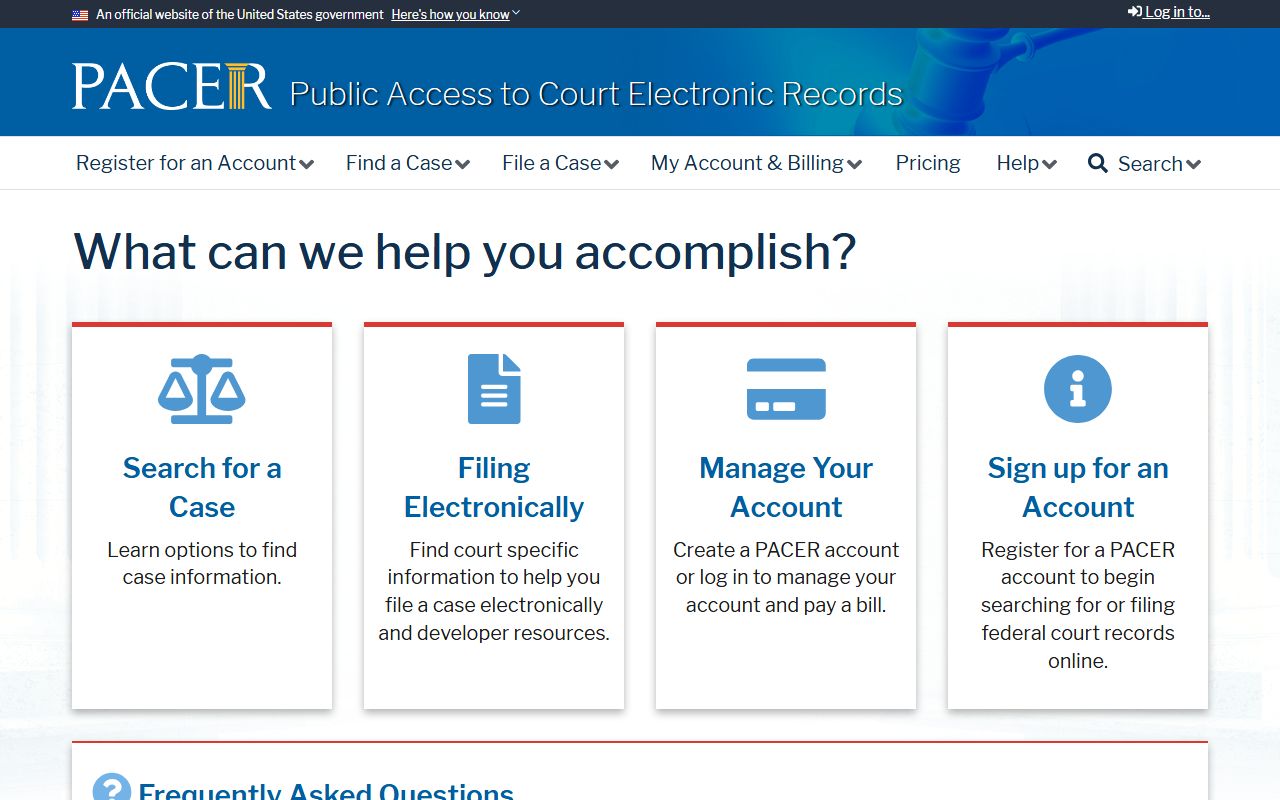
Federal cases that arise from Canadian County include federal criminal prosecutions, federal civil-rights claims, federal habeas petitions, and certain federal injunction matters. These cases are handled through the federal court system, not the state District Court, and warrant entries in those cases appear only in PACER, not OSCN.
The U.S. Attorney for the Western District of Oklahoma handles federal prosecutions from Canadian County. That office is at justice.gov/usao-wdok. Federal appeals from the Western District go to the U.S. Court of Appeals for the Tenth Circuit.
Federal Public Defender for Western Oklahoma
Anyone facing federal criminal charges arising from Canadian County may be eligible for representation by the Federal Public Defender for the Western District of Oklahoma. Federal public defense is separate from the state system; it operates under the Criminal Justice Act and covers eligible defendants in U.S. District Court proceedings, not Canadian County District Court.
The screenshot below shows the Federal Public Defender website for the Western District of Oklahoma at okw.fd.org, which is the contact point for eligible federal defendants in Canadian County. Visit okw.fd.org to learn more about eligibility and services.
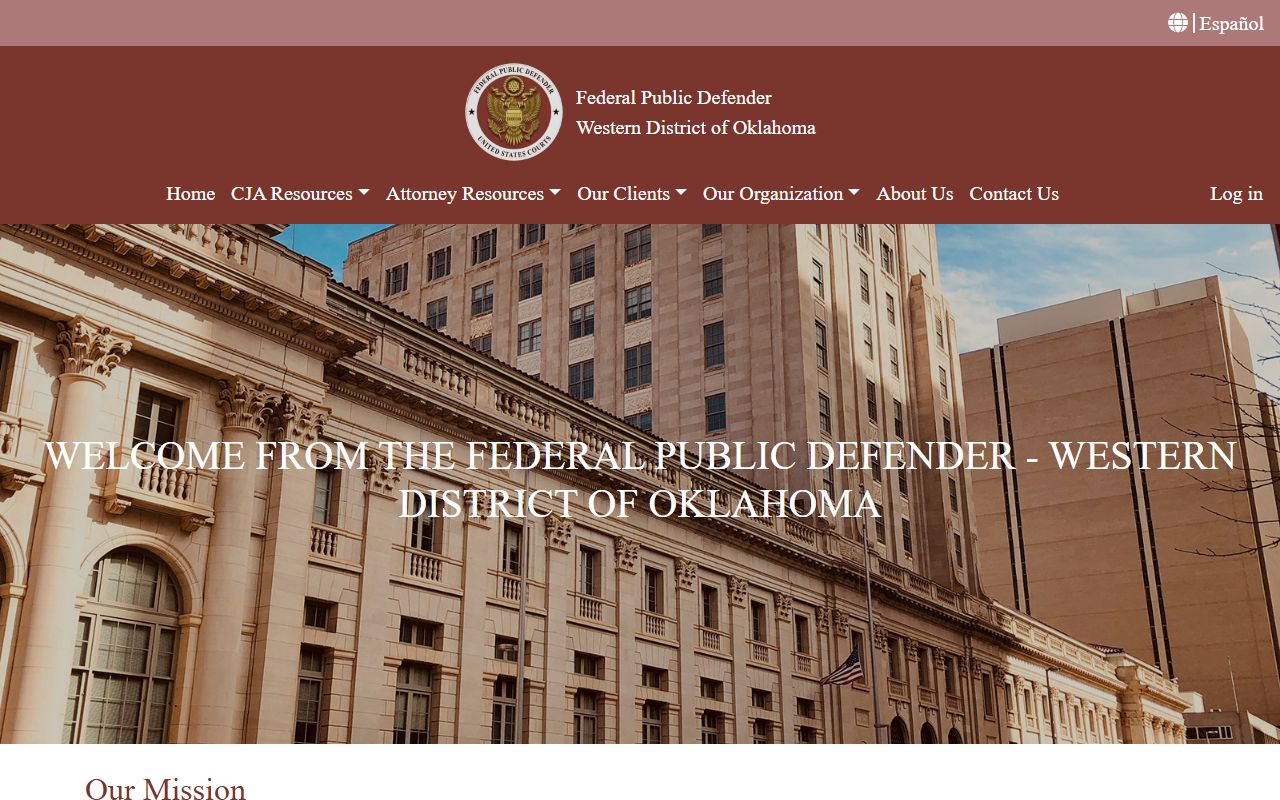
For state court matters in Canadian County, eligible defendants receive services through the Oklahoma Indigent Defense System. OIDS covers felony, misdemeanor, incarceration-punishable traffic, and juvenile delinquency matters, plus appellate and post-conviction work. The OIDS agency overview includes Canadian County in its Appellate Division West. Contact OIDS at oklahoma.gov/oids/home.html.
The District 4 District Attorney, Tommy Humphries, handles state criminal prosecution for Canadian County along with Blaine, Garfield, Grant, and Kingfisher Counties. The District 4 DA page is at oklahoma.gov/dac/district-attorneys/district-4.html.
Warrant Records That May Not Appear Publicly
Not every warrant record is fully visible in OSCN. Several categories of cases are restricted or limited under Oklahoma law and court rules. Knowing these limits helps set realistic expectations for any Canadian County warrant search.
Juvenile matters are restricted by state law. Warrants or warrant-related entries in juvenile delinquency, deprived-child, or other Title 10A proceedings may not appear in public OSCN results. Mental-health proceedings handled through the Canadian County Probate Department are confidential; warrant or process entries tied to those cases are not public. Adoption records are sealed and require a court order to access. Sealed or expunged records, including certain criminal and arrest records that were later expunged under Oklahoma statutes, may not appear in the public OSCN database even if warrant activity existed.
Sealed and expunged records deserve a separate note. Under Oklahoma statutes at 22 O.S. §§ 18 and 19, qualifying persons may petition to have criminal and arrest records sealed from public view. If a case was expunged, the warrant entries in that case may no longer be visible publicly. The absence of an OSCN result is not always proof that no warrant existed; it may mean the case was sealed. To confirm whether a record was expunged, a certified disposition or court order must be obtained directly from the Court Clerk.
Law enforcement investigative materials are also protected under 51 O.S. §§ 24A.8 and 24A.12 of the Oklahoma Open Records Act, which distinguish public law-enforcement records from protected investigation and litigation files. Some warrant-related material may fall under those protections even if the underlying case is otherwise public. See the court records page for a broader overview of public access and restricted records in Canadian County.
Municipal Citations and Warrant Limits in Canadian County
Canadian County has municipal courts in its cities, and those courts handle city-ordinance violations and some local traffic matters. OSCN covers the Canadian County District Court but not municipal courts. The OSCN citation-search field includes this explicit notice: it searches District Court citations only and does not search municipal citations.
This means that if a person has an outstanding warrant tied to a municipal ticket from El Reno or another city in the county, that warrant will not show up in OSCN. To find municipal warrant status, you need to contact the relevant city court directly. El Reno operates its own municipal court for city-ordinance and local traffic matters. Other incorporated cities in Canadian County may have their own municipal courts as well.
The distinction matters for anyone doing a full warrant check. Running an OSCN name search confirms only whether District Court cases show warrant activity. A clean OSCN result does not rule out an active municipal warrant. For a complete picture, check both OSCN and any relevant city court.
Important: OSCN citation search does not cover municipal citations. A clear OSCN result does not mean no municipal warrants exist. Contact city courts separately to check local warrant status.